How to make an invoice
Thursday, November 5, 2020 by Administrador
Whether you are self-employed or operate as a company, there is one task you will have to perform day after day: invoicing.
Neither the format of the invoice nor the billing program you choose to work with matters. However, the content of the invoice must comply with the current Billing Regulations. Currently, to make an invoice you must take into account the following details that we list below:
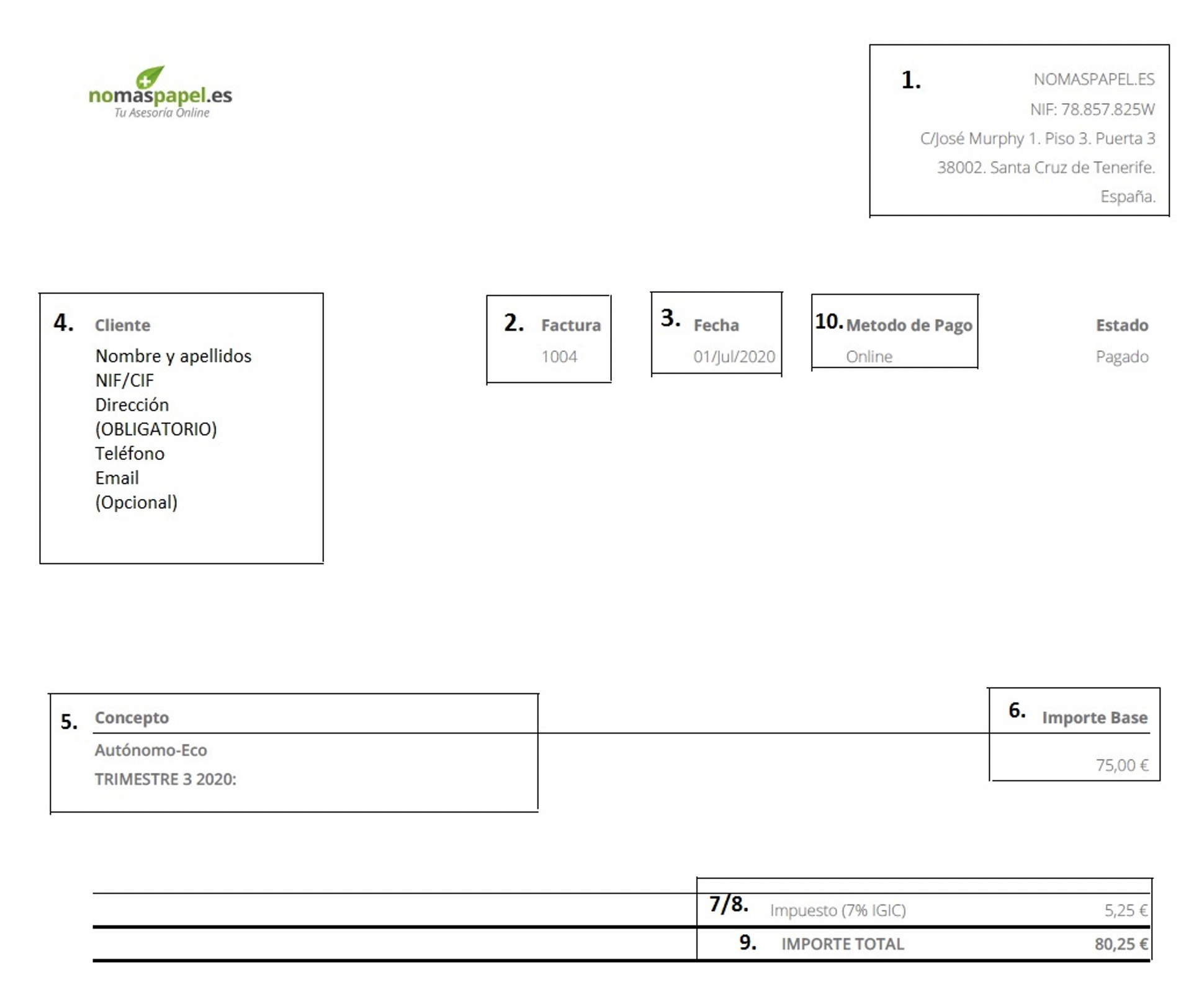
- Issuer: data of the self-employed person or company issuing the invoice must be included, that is, name and surname or corporate name, tax domicile and NIF/CIF. This data is mandatory. Optionally, other data such as a phone number or email can be included.
- Invoice number: invoices must be numbered, from one onwards, always correlatively. When starting a new fiscal year, numbering must continue in the same way, unless you prefer to restart the numbering in each year. If so, we must include in the numbering of each fiscal year, the year it refers to.
- Date: the day the invoice is issued must be indicated. The date must be correlative just like the invoice number, although invoices with the same date can coincide.
- Recipient of the invoice: the data of the physical or legal person receiving the invoice must be included, that is, name and surname or corporate name, tax domicile and NIF/CIF. This data is mandatory. Optionally, other data such as a phone number or email can be included.
- Concept: it is the reason and description of the product or service for which the invoice is issued.
- Tax base: amount of the invoice before applying taxes (IRPF and IVA/IGIC if necessary).
- Retention: retention percentages (IRPF) must be applied to the tax base, and can vary each year. They can be consulted in the tables published by the AEAT on its website, although we recommend consulting your advisor on what type of IRPF to apply depending on the case.
- IVA/IGIC: it is the amount of taxes you must charge on the invoice. In most invoices, the general type will be issued (21% IVA/7% IGIC), although it may vary in some cases. It must be applied to the tax base. We also recommend consulting the advisor before making the invoice as it may vary depending on the product or service offered.
- Total amount: sum of the tax base, minus IRPF, plus IVA/IGIC (in case these apply).
- Payment method: means by which you will receive the collection of the invoice.
If you take these ten sections into account, your invoice will contain everything necessary to comply with the requirements demanded today.
To clarify possible doubts, we show an example of an invoice with all the requirements numbered, to serve as a base when you prepare your first invoice: